If you've ever had a traditional dental impression taken, you probably remember the uncomfortable process of having a tray filled with impression material awkwardly placed in your mouth and then the uncomfortable wait as the material sets. For some patients, the hardest part is simply keeping the tray in place without gagging. This outdated process is one of many reasons why nearly 73% of people struggle with going to the dentist. Digital dental impressions offer a more comfortable alternative that makes cosmetic and restorative dental procedures both easier and more precise.
Continue reading to learn how digital impressions work, when they are most beneficial, and where to find the best dentist in Houston for comprehensive care that uses modern dental technology.
What Are Digital Dental Impressions?
Digital dental impressions are 3D records of your teeth and surrounding oral structures created with a handheld scanner, called an intraoral scanner, that uses optical technology to capture images of the teeth. While traditional dental impressions physically capture the shape of the teeth in a soft material, digital impressions capture that information electronically. The best dentist in Houston can then use the digital file to plan treatment or send it to a dental laboratory when a dental restoration needs to be fabricated.
When Are Digital Dental Impressions Used?
Digital impressions can be used for many restorative dental treatments, as well as cosmetic and orthodontic treatments. Some of the most common ways digital dental impressions are used include:
- Dental crowns
- Dental bridges
- Dental veneers
- Clear aligners
- Dental implants:
- Night guards and dental appliances
- Smile makeovers
Digital scanning is particularly useful when several teeth are being treated because the dentist can view the teeth as a three-dimensional model rather than relying only on a physical impression.
What Happens During a Digital Dental Scan?
A digital scan is usually a very simple and straightforward process. It’s also very comfortable since there is no impression material involved.
- Your teeth are prepared: The area needs to be visible and reasonably dry so the scanner can capture clear information, so your dentist will start by cleaning and drying your teeth.
- The scanner moves over your teeth: The dentist or dental team gently moves the scanner around your mouth as it captures images of the teeth from multiple angles. You don't need to bite into a tray or hold impression material in your mouth while it sets.
- A 3D model develops on the screen: As the scanner captures images, software stitches the information together in real time to create a three-dimensional model.
- The dentist checks the scan: This is an important step that ensures every angle is captured with accuracy. If any portion of your mouth is unclear, the scanner can be returned to that area rather than repeating the entire impression.
- Your bite may be recorded: Depending on the treatment, the dental team may also scan how your upper and lower teeth come together. This gives the dentist and laboratory additional information needed to design a restoration that fits your bite.
- The digital file is used for treatment planning: The completed scan can be transferred electronically to a dental laboratory. This eliminates the need to physically package and transport a traditional impression.
Are Digital Impressions More Accurate Than Traditional Impressions?
Research finds that digital and conventional impressions can both provide clinically acceptable results, with digital impressions offering huge advantages in patient comfort and efficiency.
Are Digital Dental Impressions Better for Cosmetic Dentistry?
Digital impressions can be especially useful when cosmetic treatment requires careful attention to shape, proportions, and the relationship between multiple teeth. For example, veneers or a larger smile makeover may involve changing the appearance of several teeth at once. This means the best cosmetic dentist in Houston needs to consider more than whether each individual restoration fits. The restorations also need to work together as part of one smile.
A digital model can help the dental team evaluate the existing teeth and communicate detailed information to the dental laboratory. Depending on the technology and treatment plan, digital records may also be combined with photographs or other digital information to support cosmetic treatment planning.
Who Benefits Most From Digital Dental Impressions?
Digital impressions are also extremely helpful for patients who find traditional impressions uncomfortable. You may appreciate digital scanning if you:
- Have a strong gag reflex
- Dislike the feeling of impression material
- Have difficulty tolerating a tray in your mouth
- Need several restorations
- Are considering cosmetic dental treatment
- Need clear aligner treatment
- Prefer a more technology-driven dental experience
- Want to see a 3D representation of your teeth during treatment planning
Where to Find the Best Dentist in Houston for Modern Dental Care
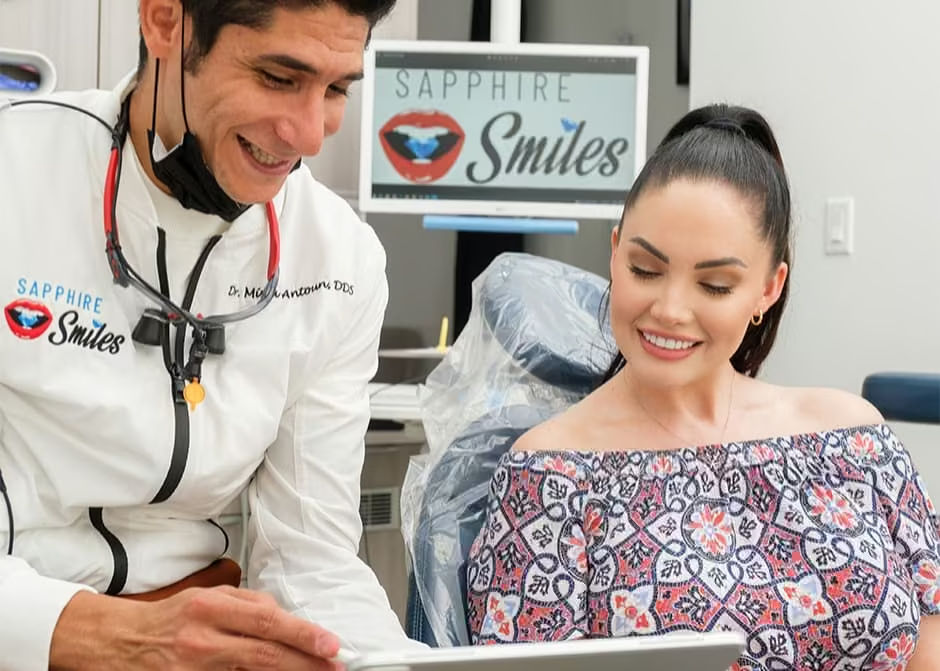
Digital dental impressions have changed a part of dentistry that many patients traditionally found uncomfortable. Sapphire Smiles is committed to using advanced technology when it can make care more comfortable, improve treatment planning, and give our team better information to work with.
At our state-of-the-art clinic, Dr. Antoun has advanced training in aesthetic dentistry and continues to pursue education in cosmetic dentistry, while Dr. Mary Antoun has specialized training in smile makeovers and Invisalign. Both are members of the American Dental Association, Texas Dental Association, and Greater Houston Dental Society, and Dr. Mary is also a member of the American Academy of Clear Aligners.
Our goal is to combine that experience with modern technology and individualized care, whether you need a single restoration or are considering a comprehensive smile makeover.
Ready to see the best dentist in Houston who offers advanced dental technology for a better experience and more effective treatment?


.avif)

.svg)

.svg)
.svg)
.svg)
.svg)


